Helsinki 1.10.2026
10/2026
Thursday, 1st October 2026
16:00–18:00
Harald Herlin Learning Centre, Room 106 (Ilmari), Otaniemi
Register here:
https://forms.gle/FCJdWCXjGvTKpBVG9
WELCOME!
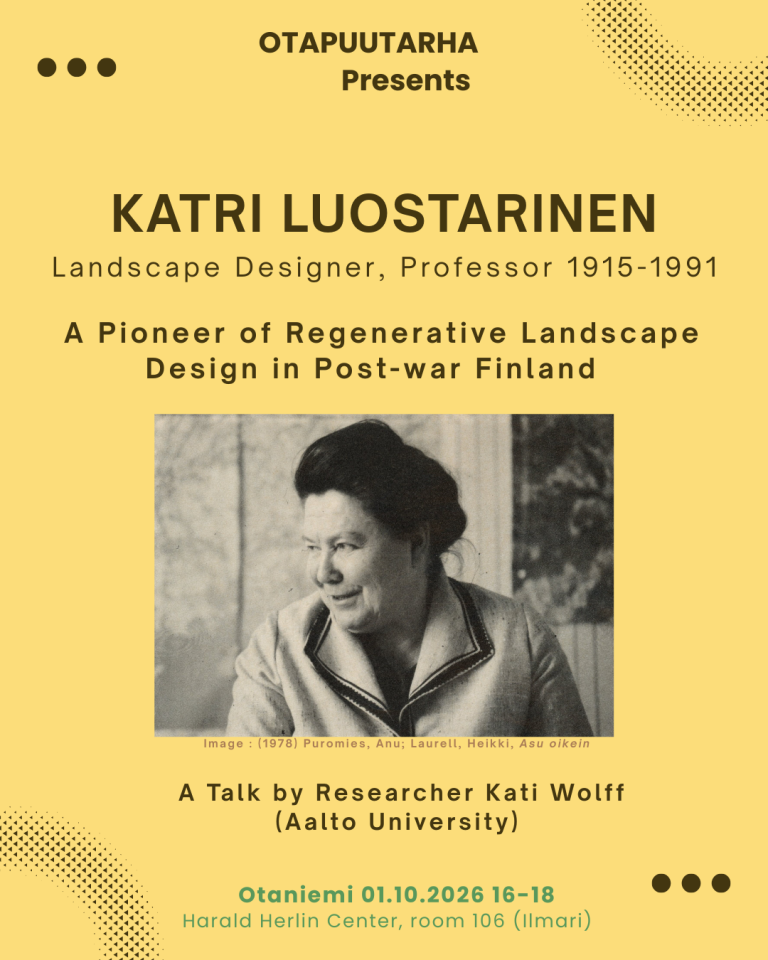
Otapuutarha presents ~The postwar roots of resilient Landscape Architecture in Finland and a Landscape Designer ahead of her time~
Join us for an evocative talk by Kati Wolff (Researcher, Aalto Department of Architecture) on Thursday October 1st 16-18 in Otaniemi!
Resilience in Landscape Architecture goes back to one of the pioneers, Katri Luostarinen, who endorsed practical and affordable design and selected wild plants and perennials in place of lawns as an early aspect of regenerative practice. Reviving her early career work in the 1950s, this talk extends the historical framework of landscape architecture in Finland and provides contemporary practitioners with references on resilient design and maintenance. Luostarinen's career ran from the late 1940s to 1983, when she finally retired from her professorship in Otaniemi.
The 1950s in Finland were shaped by the aftermath of war: the country was rebuilding under the weight of war reparations and pushing through rapid, state-led reconstruction and industrialization. Under President J.K. Paasikivi (and from 1956 under Urho Kekkonen), national policy emphasized self-sufficiency and pragmatism: favouring resourcefulness over wastefulness and lavishness, including in design. It was within this landscape of scarcity and reconstruction that Luostarinen's preference for robust, low-maintenance planting and wild perennials over ornamental lawns took shape: a distinctive choice deeply attuned to a nation rebuilding with limited means, and a bold forerunner of what would later be recognized as regenerative design principles.
https://www.instagram.com/otapuutarha/?hl=e
Liverpool 14.-16.4.2026
04/2026
Archives and landscape architecture, happy to join!
02 2026
Doing a Phd
FOLAR, The Friends of the Landscape Archive Reading, is organising an online talk series with the theme Doing a PhD.
Tuesdays 17 March-28 April 2026 online talks with Q+A
17 March Kati Wolff - On Katri Luostarinen: Pioneer of Regenerative Landscape Design in Post-War Finland - 18:00 - 19:30 (GMT)
24 March Charlotte McLean - It’s never too late … undertaking a PhD in your 50s - 18:00 - 19:30 (GMT)
April 14 Kate Cullity - Braided Pathways: A Practice Sustained by Difference - 19.30 - 20.45 pm (GMT) [please note time difference]
April 21 Sarah Dickinson - The challenges of developing a thesis on the impact and significance of the planting plan - 18:00 - 19:30 (GMT)
April 28 David Jacques - An original contribution to knowledge -18:00 - 19:30 (GMT)
The series: https://www.folar.uk/events/doing-a-phd
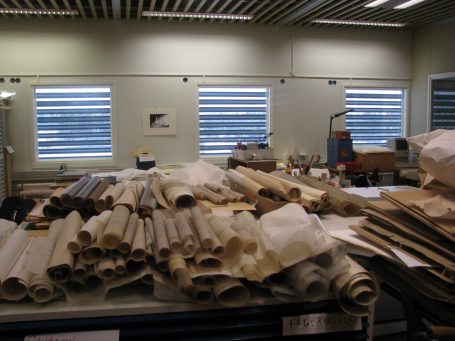
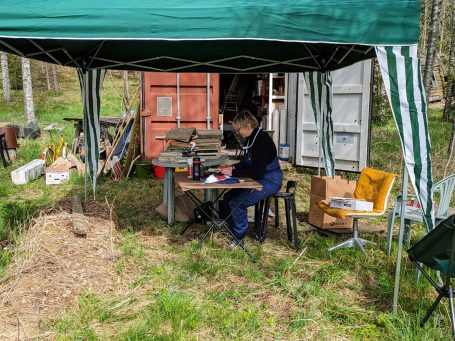
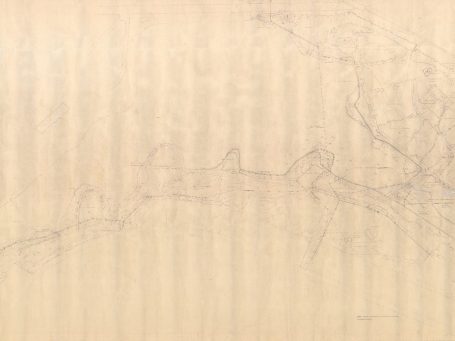
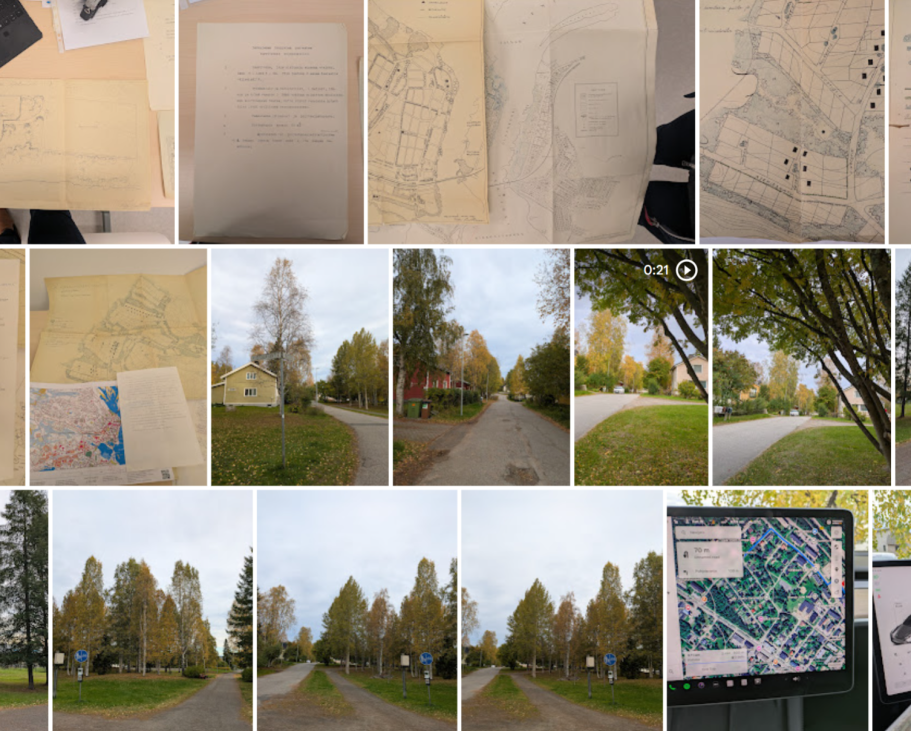
Pic: Impressions of the archival and field works in Rovaniemi 19.9.-3.10.2025
09
2024
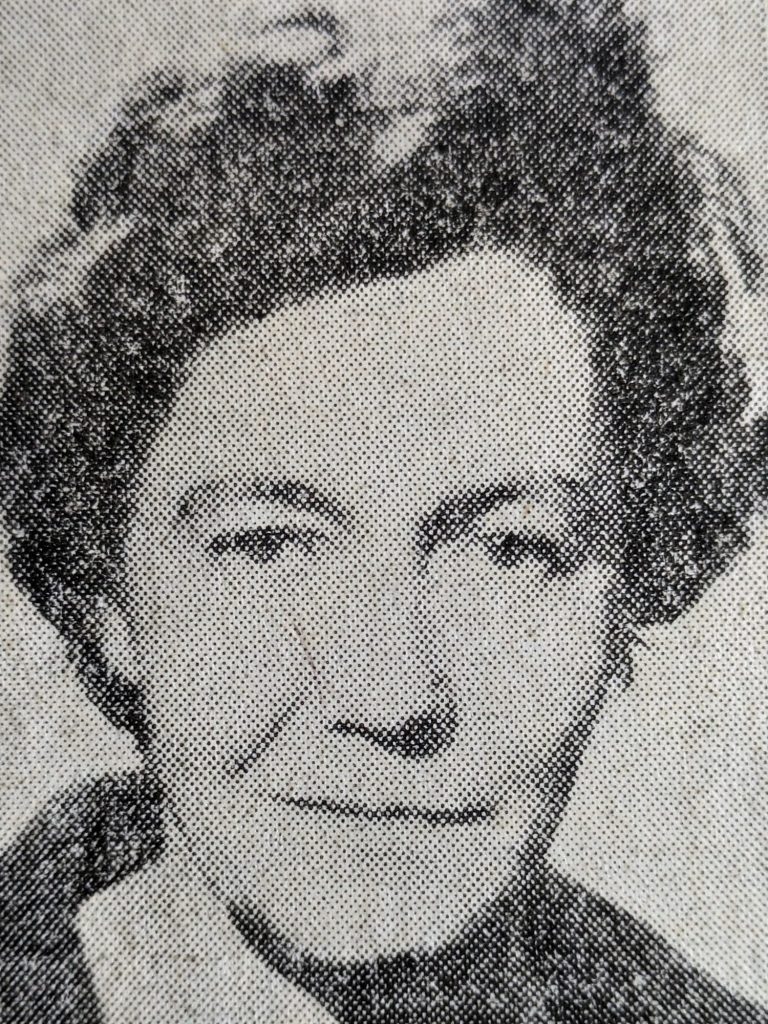
Garden architect Katri Luostarinen
This text was written for ECLAS2024, Regenerative Landscapes. Designing the Transition https://conference.eclas.org/ presentation, on September 7th at Université Libre de Bruxelles (ULB), Faculté d’Architecture La Cambre Horta, Bruxelles, Belgium
I began my PhD studies in Landscape Architecture at Aalto University's School of Arts, Design and Architecture in Helsinki in January 2024. My supervisors are Professor Ranja Hautamäki and PhD Julia Donner (Art History), and the working title is
The role of landscape architect Katri Luostarinen (1915-1991) in the growth of nature-inspired, regenerative landscape design in Finland after WWII.
More specifically, the Early Regenerative Landscapes in Katri Luostarinens' work in Northern Finland during the 1950s.
As a professor and landscape architect, Katri Luostarinen was one of the pioneers of Finnish landscape architecture, particularly in large-scale planning. In her 1951 book Puutarha ja Maisema “Garden and Landscape,” she advocated for landscape values in urban planning and introduced international ideas of imitating natural ecosystem processes.
Though the German-speaking world mainly influenced her, she was also a fan of designers like Mien Ruys, Mirei Shigemori and Christoffer Tunnard, and she also closely followed discussions on Nordic and German landscape planning and design throughout her career. She was the founding member of the Society of Finnish Garden Architects, SPAFTA. Luostarinen’s initial works show Finland’s early landscape architecture focused on nature and regeneration. It shows that nature-based design has a long history.
I never met Katri Luostarinen, nor did I know her personally. My work with her began around 2008, when I consulted and moved the Luostarinen drawings collection to the Finnish Architecture Museum between 2009 and 2010. I’ve been fascinated by her since then. I spent May 2024 cataloguing Luostarinens library in a remote summer cottage, before the books were thrown into the bin due to extreme mould. I saw a situation where someone should write her story. So, why not me? It’s time to find out more about what she did. I am not a junior scholar. I have a background as a university lecturer in Helsinki; I’ve been out of academia for over 10 years and live in Luxembourg. I’ve always thought that a PhD is something for a young academic, a ticket to the party, so to speak. Because of that, I was pretty unsure about beginning the work. But, this is how knowledge is created, so let’s do it if I can. And yes, this is a treat.
I’m going to explore Katri Luostarinen’s role in Finland’s post-WWII landscape planning.: What are the key features of the Rovaniemi 1949-1953 and Kajaani 1956 plans? Is Kajaani-Kaupunginlampi potentially Finland’s first regenerative landscape plan?
My research strategy centres on pragmatism, using archives and discovering new data. Katri Luostarinens' whole career and life, also as the first professor in landscape architecture, would be too big a task for a PhD.
I’m interested in her first professional regenerative landscape projects in Northern Finland from the 1950s. Architecture and landscape architecture have examined Finnish forest suburbs in the context of post-war modernist planning. However, the theme of regenerative, understood as promoting long-term sustainability, increasing biodiversity and improving resilience on a larger scale adapted to industrial landscapes, has yet to be focused on.
This work explores Katri’s influence, references, and ideas across generations. Microhistory serves as a research tool for oral history analysis and is also appropriate for understanding Luostarinens’s studies in Berlin from 1943-1944 under Professor Heinrich Friedrich Wiepking-Jürgesmann (1891-1973). However, Luostarinens library seems to prove broader international interests.
Landscape design and planning reflect society's ideals. Microhistory and responsible history are tools in historical research, promoting transparency and offering methods for better understanding the past. They give us a perspective in which a short-lived event reveals a long-lived construct; e.g., a person’s history can be used to examine macro-level phenomena.